
More Characteristics of False Prophets
This post continues the study on False prophets found here.
This post continues the study on False prophets found here.
What is Prophecy? is a study of what is prophecy in the Bible, and how that affects our understanding and true and false ministers of God.
Ads
Summary: In this post we examine how false prophets are unshackled from God’s will, doing their own plans, inventions, and will.
Matt 7:21 Not every one that saith unto me, Lord, Lord, shall enter into the kingdom of heaven; but he that doeth the will of my Father which is in heaven. Matt 7:22 Many will say to me in that day, Lord, Lord, have we not prophesied in thy name? and in thy name have cast out devils? and in thy name done many wonderful works? Matt 7:23 And then will I profess unto them, I never knew you: depart from me, ye that work iniquity.
 One of the clearest teachings on false prophets is Jesus telling us that they will be a part of our lives in the future in Matthew 7. The key focus of this passage is simply that nobody will even enter heaven (much less be a minister and servant of God that enters heaven and is blessed and praised by God for their ministry) IF THEY ARE NOT DOING GOD’S WILL!
Here we need to digress some. God’s will is very clear in the Bible. Jesus focused on God’s will of being holy, but first and foremost is the salvation of the soul. That salvation transforms the life from the sinful human nature of BEFORE to the holiness of a man or woman of God AFTER.
The moral pattern by which we check the will of God is that which Jesus left us. Did Jesus have a jet plane for his own use? No. Did he even have a horse of a good breed? No. He borrowed a burro and came riding into Jerusalem in preparation of the great contradiction of glory one moment and then the Jews killing him the next. Did Jesus even have a place to lay his head? No. I see believers owning their own houses throughout the Bible, but if you want to get technical about it, God’s ministers were not rich, nor did they focus their ministries on getting rich.
Notice how Satan’s men, the false prophets, change and justify their own ministries and lifestyle. They claimed that they had the blessing of God on their ministry because they did wonderful works (miracles, and great things for God), and that they had power over the spirit world of demons and such, and that they even prophised (which could be preaching to receiving new revelations from God). None of this did Jesus contend with them over it. Simply put Jesus’ accusation is that they had a low regard or no regard for God’s will in their ministry. Disobedience is not justified by what miracles or great things a person seemingly does for God.
God’s will is an iron cast standard for discerning whether a person is a false prophet or not. Nothing a minister or Christian does is good if it is outside of God’s will.
1Cor 14:37 If any man think himself to be a prophet, or spiritual, let him acknowledge that the things that I write unto you are the commandments of the Lord.
There is a tactic acknowledgement and submission to the commandments of God as being the authority in one’s life. Some want to make homosexuals and other sexual perversions acceptable. God has commanded that these fornications be not named once among God’s people. You can start a homosexual church and have a million people in it, all witnessing for God, giving out the gospel every day, and have a million of them praying daily for hours to God, and it is all wrong and all of them will go to hell, because at the bottom most level, it is not God’s will. Repentance of sin, and abandonment of worldly lifestyles is a prerequisite for pleasing God.
1Cor 3:10 According to the grace of God which is given unto me, as a wise masterbuilder, I have laid the foundation, and another buildeth thereon. But let every man take heed how he buildeth thereupon.
We must be wise builders, doing what God says, and nothing else. What is typical of man, and especially typical among false prophets is that they ignore what God has actually said, and go about to fabricate some substitute. All of this is condemned in God’s eyes. It will never come to anything good until the people involved repent of their rebellion from God, and go back to the Bible and find God’s will, and begin with doing that.
Churches use modern programs to get people to attend their churches. But without the beginning element of evangelism, these new people bring heathen ways and thoughts into the church, and either there is turmoil and conflict or the church will give up their biblical ways and doctrines to keep these people saved. This never ends good for anybody involved.
This is an epitome of a false prophet. Instead of looking at what the Bible commands, Warren looked at what people in his neighbor wanted. First of all that is just wrong. It is a false prophet. Secondly, he didn’t even look at what good, godly Christians wanted, but what unregenerated people wanted.
See ch41 The marks of a bad minister
1Kgs 19:13 And it was so, when Elijah heard it, that he wrapped his face in his mantle, and went out, and stood in the entering in of the cave. And, behold, there came a voice unto him, and said, What doest thou here, Elijah? 1Kgs 19:14 And he said, I have been very jealous for the LORD God of hosts: because the children of Israel have forsaken thy covenant, thrown down thine altars, and slain thy prophets with the sword; and I, even I only, am left; and they seek my life, to take it away. 1Kgs 19:15 And the LORD said unto him, Go, return on thy way to the wilderness of Damascus: and when thou comest, anoint Hazael to be king over Syria: 1Kgs 19:16 And Jehu the son of Nimshi shalt thou anoint to be king over Israel: and Elisha the son of Shaphat of Abelmeholah shalt thou anoint to be prophet in thy room. 1Kgs 19:17 And it shall come to pass, that him that escapeth the sword of Hazael shall Jehu slay: and him that escapeth from the sword of Jehu shall Elisha slay. 1Kgs 19:18 Yet I have left me seven thousand in Israel, all the knees which have not bowed unto Baal, and every mouth which hath not kissed him.
Many of God’s servants feel that they are alone in the world, and they alone are serving God correctly. Even so they get discouraged and want to give in to the pressures of the world to conform to the world’s standards and be “politically correct” with the corrupt world system. This passage was an encouragement to Elijah, and without doubt it is also an encouragement to us that God will not let everybody go the way of the world except us. We will always be part of the remnant, and there will always be others.
Mark 9:38 And John answered him, saying, Master, we saw one casting out devils in thy name, and he followeth not us: and we forbad him, because he followeth not us. Mark 9:39 But Jesus said, Forbid him not: for there is no man which shall do a miracle in my name, that can lightly speak evil of me. Mark 9:40 For he that is not against us is on our part.
This passage of Scripture is very important. At the time Jesus walked the earth, there were other believers that were not exactly a part of Christ’s band of followers, and yet they were not wrong either. Christ explains that the group or being a part of the group is not what makes a person right, but what they believe, and what they do (along with what they are morally). This does not open up an alternative way of salvation, but it does establish that some people that are right in God’s eyes may not be in your group.
Note: For the Baptist Briders and Landmark Baptist people, this is very difficult. If there was only one church, and everybody HAD TO HAVE COME THROUGH THEM AND THAT ORGANIZATION, then how did Christ let this other minister/group go on without specifically joining to the band of the 12 apostles?
John 8:43 Why do ye not understand my speech? even because ye cannot hear my word.
John 7:17 If any man will do his will, he shall know of the doctrine, whether it be of God, or whether I speak of myself.
See my Tracts
ch38 Recognizing a Good Pastor
ch26 “Don’t touch the anointed of God”
One of the requirements for discernment and understanding God’s will is a biblical disposition towards God’s will, and a history of seeking and complying with God’s will. I often see churches where the pastor has had his own way in imposition his own will, and that has become a false god that those at that church worship. This is sad.
In other churches, I wonder as they claim to be good churches of biblical doctrine, but I see the early Christians literally burning their lives for Christ in order to get the gospel out, yet I see these modern churches have no burden for the gospel, and their efforts in getting the gospel out can basically be boiled down to a sign with their church name on it in the front lawn.
No church is going to please God if it is not weekly sending out workers to witness the gospel to the unsaved, sending and funding missionaries, explaining and offering the gospel regularly in their services, and praying for the salvation of the lost.
False prophets “USE” this biblial activity for their own benefit, and in reality, being a false prophet, they don’t want these people they drag into their fellowships to really be saved (because they will first cause trouble and then leave). So what they do is to “water down” the gospel so as to make it ineffectual. Jack Hyles guys will preach a salvation that has no real reference to remorse, repentance, and abandonment of sin. An unsaved person can just repeat the words after their soul-winner, and they are part of the group. When you do that, you can “win” thousands every year to the Lord. When you press for true repentance before receiving Christ, those thousands dwindle to dozens. The issue is that simply a person must give up his own will before he is truly saved, and without dealing with this (sin is an expression of one’s own will), the person has no chance of truly getting saved.
See my tract: salv31 Easy-Believism
Many churches exchange out the Bible gospel for social work. This too is just wrong, and not God’s will. If you want to know if you minister or church is squarely in God’s will, look to see if in the church services and in their evangelism time, they focus on the plan of salvation, communicating that to the unsaved.
See my tract: ch43 Time to leave your church?
See my tract: ch42 Destitution of Pastor
False prophets want to be Unshackled from God’s Will and this causes them to be very easily identified. Although they constantly proclaim that their own understandings is God’s will, we just don’t see their views and practices in the New Testament. This is the key to discerning what they are. To read the NT we see and emphasis and focus on salvation and holiness, and these prophets of their own selves push their own benefits, ministry, and person for worship and sacrifice to them.
A biblical pastor has a clear view of what he is supposed to do, and the biblical bases for that set of commandments.
See my tract: ch49 The Biblical Pastor: The Biblical Duty
As a saved person you too must have a clear view of God’s will for your life, understand it, and also understand where in the Bible it comes from.
See my tract: salv02 Now that you have Believed
See my tract: ch19 Marks of a False Prophet
See my tract: pc07 Fasting: Fixing your Life with God
https://www.facebook.com/jorge.corbettrodriguez.7/videos/1656859171255660/
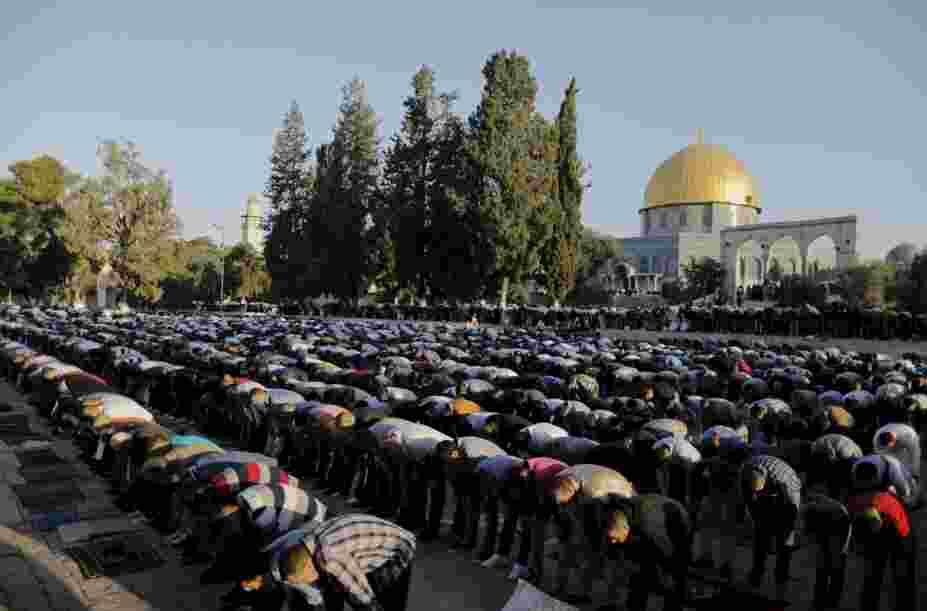 Although there are some problems with this man’s words, (he is just telling what the Koran says), but some of the points are very interesting. Apparently he was converted to Catholicism. Continue reading
Detecting Emergent Churches Methodology
Detecting if your church is an Emergent Church
By David Cox
This is our continuing examination of the Emergent Church movement, looking at what are the signs of the Emergent Church, so that we can detect if our church is going emergent.
 God has set our methodology in concrete. We are to preach the gospel, which is to declare man’s sinfulness (which causes a bad feeling in people who are unsaved and saved), and then to declare God’s love in that God sent his Son Jesus to the cross to die for our sins. He died for us taking on himself our sins, and in his resurrection, his offering for our sins is shown as being accepted because God the Father, God the Son, and God the Holy Spirit resurrected Jesus.
The Emergent Church says that we need to change all that, and everything else about “doing church” as they call it, and make a new form rather than that which God has given us. Inherent in this, they condemn the old ways that God has given us as unacceptable for today, and that we need to redo them. Again they show authority from themselves while rejecting the authority of God. Their declaration that “church as we have been traditionly doing it doesn’t work”. Why does it work? It doesn’t work for them because they have been doing the traditional way without faith, and without real love and obedience to God, so it won’t work under those conditions. Continue reading
 Bible Versions. I should start off this post by saying that I believe and use the KJV as my Bible version when I use an English Bible. I am a missionary fluent in Spanish, and use a Spanish Bible version in my church in Mexico City. Let me just say that people who are honest and look at this issue from all sides, and if that person is a modern day “Fundamentalist”, he would have problems “getting into bed” with any one of these theories floating around out there.
One of the pillars of Calvinism is t he doctrinal of Total Depravity. The doctrine is stated simply as man is totally depraved or evil, and there is no good in him. From Wikipedia.org they define “
Continue reading
Damaged Disciples: Casualties of Authoritarian Churches and the Shepherding Movement, Ron and Vicki Burks, 1992. Ron was taught to subject himself totally to his disciplers in the shepherding movement. Vicki was taught to submit to her husband. This is their story of struggling to break free and rebuild their lives. For Vicki, it is the story of rescuing her “self” from non-being. Ron later earned his PhD. in counseling and was on staff at Wellspring. Here is his dissertation, Cognitive Impairment In Thought Reform Environments.
Comments on Recovering from Churches that abuse #4 I Comment on Chapter 2 Is there light at the end of the tunnel? Churches that abuse Exiting them.
Commentary about Enroth, R. – Recovering from Churches that Abuse
Boundaries: When To Say Yes, When to Say No to Take Control of Your Life, Dr. Henry Cloud &s Dr. John Townsend, 1992. The Assembly system intentionally militated to break down normal boundaries in peoples lives. The concepts and examples in this book are extremely helpful to recognize where the issues lie and change course. There is an accompanying workbook.

Buy me a Cup of Coffee! To make an old Christian work into a PDF, a module for theWord, MySword, or eSword takes time. These works are scans from old books, and as such, I have to go through the text some dozen times looking for places where the OCR is incorrect, blurred, or just skipped something.
Text Editing.Then there are the old Bible references like John iii. 16. Many young Christians and even preachers do not know the Latin system for books of the Bible. I convert Roman numerals in these books to Arabic (iii. to 3).
I have had to invest days and days in writing macros to read a long text, and make substitutions (for the above, search for "iii" and replace with "3:"). Unfortunately, with Psalms you have to start with 150 in Roman numerals (CL) and work your way backwards. But using macros, it is almost instantaneous the next time I need this. Work smarter, not harder. All this takes time and patience, (and being smart enough to do it in a macro language) (as well as a lot of coffee) and then making the text into theWord or eSword, mySword or a PDF.
Please donate something to me once every 6 months or even once a year, even if it is only $5, so that I can pay my bills for hosting, and also keep things moving along. It costs me about $10 per month to keep a website on the Internet. My websites also contains ads which have links to my sermons, tracts, books, that I have written. These keep my works before visitors, even if they are not visiting the specific website where I have them stored. It is my own "web" internally of my own sites with links to good Christian literature. May God bless for your prayers and donations.
Take a look at a few of our tracts:
salv76 suffering should seek his Savior - explains how we should react to problems and sufferings, we should seek the Savior.
pc15 How to fight against depression - we treat the problem of depression. Depression is not a physical disease, it is an emotional and spiritual disease that "bleeds over" and causes aggravation and physical consequences if not attended to at the spiritual-social-emotional level.
ch15 Congregating because we Love - a tract about why we attend church. Our relationship with our brethren in Christ is highly integrated with our salvation and our sanctification.
SSTeen1-01 Existence of God - Does God really exist? This is not a tract but a teen Sunday School Class that I wrote answering this important question.
fam48 Men are God's Agents - Men are God’s Agents to accomplish His Will, looks at man as God wants him to be. Manhood and the husband-wife relationship.
Donations: paypal.me/davidcoxmex/

evc05 A Young Earth: There is not enough Time for Evolution explains why our earth is young, and evolutionists are wrong.
Topics: What do Christian scientists believe? | The Law of Uniformity | The Laws of Physics | Rapid Erosion | The Fossils | The Decay of the Magnetic Field | The Accumulations of Millions of Years | DNA and Mystery | Carbon 14 | Why does this problem exist?
From the Tract: Evolutionists use the Law of Uniformity that everything happening in our world is uniform as a basis to make their calculations. If a river removes one centimeter of stone every 10 years, then they measure how many centimeters there are uncovered and calculate the time that has passed in this erosion. What they do not consider is the possibility of natural disasters such as the explosion of Mount Saint Helens in Washington. We saw “live” within hours the erosion that was supposed to take millions of years to happen. This reveals the error of the principle of uniformity because it cannot be assumed that everything remains “uniform” for all ages, that natural events of a dramatic nature happen.
Read the Tract: evc05 A Young Earth: There is not enough Time for Evolution
ch20 Baptists: Why we call ourselves Baptists v.1.2 Baptists: Why we call ourselves “Baptists”? What does “Baptist” mean? An honest explanation of why we are Baptist.
Topics: John the Baptist | What the name “Baptist” does NOT mean | (1) The Authority of the Bible | (2) True Baptists demand an exclusively saved membership. | (3) Soul Liberty | (4) The Priesthood of Every Believer | (5) There are two Ordinances: Baptism and the Lord’s Supper | (6) There are only two official church offices: Pastor and Deacon | (7) The Autonomy of the Local Church | (8) Separation of Church and State – Some groups put this under point number 7, saying they do not receive state funds or support.
coxtracts ch20 Baptists: Why we call ourselves Baptists v.1.2.
Buy me a Cup of Coffee! To make an old Christian work into a PDF, a module for theWord, MySword, or eSword takes time. These works are scans from old books, and as such, I have to go through the text some dozen times looking for places where the OCR is incorrect, blurred, or just skipped something.
Text Editing.Then there are the old Bible references like John iii. 16. Many young Christians and even preachers do not know the Latin system for books of the Bible. I convert Roman numerals in these books to Arabic (iii. to 3).
I have had to invest days and days in writing macros to read a long text, and make substitutions (for the above, search for "iii" and replace with "3:"). Unfortunately, with Psalms you have to start with 150 in Roman numerals (CL) and work your way backwards. But using macros, it is almost instantaneous the next time I need this. Work smarter, not harder. All this takes time and patience, (and being smart enough to do it in a macro language) (as well as a lot of coffee) and then making the text into theWord or eSword, mySword or a PDF.
Please donate something to me once every 6 months or even once a year, even if it is only $5, so that I can pay my bills for hosting, and also keep things moving along. It costs me about $10 per month to keep a website on the Internet. My websites also contains ads which have links to my sermons, tracts, books, that I have written. These keep my works before visitors, even if they are not visiting the specific website where I have them stored. It is my own "web" internally of my own sites with links to good Christian literature. May God bless for your prayers and donations.
Take a look at a few of our tracts:
salv76 suffering should seek his Savior - explains how we should react to problems and sufferings, we should seek the Savior.
pc15 How to fight against depression - we treat the problem of depression. Depression is not a physical disease, it is an emotional and spiritual disease that "bleeds over" and causes aggravation and physical consequences if not attended to at the spiritual-social-emotional level.
ch15 Congregating because we Love - a tract about why we attend church. Our relationship with our brethren in Christ is highly integrated with our salvation and our sanctification.
SSTeen1-01 Existence of God - Does God really exist? This is not a tract but a teen Sunday School Class that I wrote answering this important question.
fam48 Men are God's Agents - Men are God’s Agents to accomplish His Will, looks at man as God wants him to be. Manhood and the husband-wife relationship.
Donations: paypal.me/davidcoxmex/
ch34 Brethren, we must not fight! explains why Christians should not be contentious, especially between brethren.
Topics: Because it is important? | Irritating one another | Biting and wasting away | The Relationship Between One Another | Upholding one another and putting up with one another | Forgiving one another | Exhorting and teaching you | Cheer up and build yourselves.
Except from the Tract: The Bible speaks of a Christian as a person who has a different personality. This person who is saved is someone who seeks to impose brotherly love in his life, in that he loves his brethren. This is a change from the carnal life he was in before he was saved, “living in malice and envy, loathsome, and hating one another.” (Titus 3:3)... Perhaps it is not very obvious why brethren should not fight, but God hates brethren when they are fighting. First, we have to understand that God in his essence is love. Aggression, friction, strife, and fighting are things that God opposes.
ch34 Brethren, we must not fight!
Dagg Manual of Theology is a theology work in 2 volumes by J.L. Dagg a Reformed Southern Baptist. It is an extensive, very ample presentation of doctrines.
This is an extensive Bible Systematic Theology (Bible Doctrines book) from a conservative point of view.
Read/Download: now with pdf download link. 50,000 views on this page with download link

Preaching to Offend no One is an article about frankness in preaching and preaching on things that need to be addressed, but many preachers shy away from these.
Topics: Comments on Brandon Cox's Article | What is the real problem? | A Profile of a Professional Man of God Preacher | Cowards are not going to make it to heaven. | Greed is the Tail that Wags the Dog | Balance
Excerpt: A good professional will do his job, however it inconveniences the people he touches. This is how a preacher who is a man of God will work. He tells his people the truth. Explaining the truth, so everybody understands it, he then motivates them to change their lives. A good preacher obeys God explicitly as much as he understands what God wants.
Preaching is like going to your doctor. A superb doctor examines you, does tests on you, and then he has a summary visit with you where he tells you all the things wrong with you, and how you need to 1) lose weight, 2) stop eating red meat, 3) get more exercise (or begin to exercise because you don't look like you have worked up a sweat since a cop pulled you over for speeding), etc. He tells you the truth, no matter how "offensive" it is.
Read the Article: Preaching to Offend no one.